Omega-6/Omega-3 Ratios of Nut and Seed Oils


Nut and seed oils with a high omega-6/omega-3 ratio are inflammatory.  If you are suffering from pain and inflammation, you may want to consider cutting back on your intake of refined vegetable oils, refined flour, sugar, and high fructose corn syrup.  See “Managing Inflammation” on the Food and Health tab.

OilRatio of Omega-6 to Omega-3 (Ideal is 3:1 to 1:1)
Flaxseed1/4:1
Butter, Grass-fed animals1:1
Walnut5:1
Soybean7:1
Butter, commercial9:1
Olive11:1
Sunflower19:1
Palm 46:1
Corn72:1
Safflower186:1
Cottonseed234:1


Fats–A “Feel Good” Macronutrient


The foods that protect us against depression and help us engage in low time-preference, future-oriented activities are the same foods that traditional cultures valued for good health.  They provide vitamins A and D, calcium, and arachidonic acid in abundance.  See February 2011 “Attuned to Winter”

Cod liver oilvitamins A and D
Butter from grass-fed animalsarachidonic acid, vitamins A and D
Egg yolks from grass-fed chickensarachidonic acid, vitamins A and D
Fats from grass-fed animalsarachidonic acid, vitamins A and D
Organ meats from grass-fed animalsarachidonic acid, vitamns A and D
Bone brothscalcium
Fish eggsvitamins A and D
Small whole fish (herbivores)calcium, vitamins A and D
Shell fishvitamins A and D


Is Sugar Toxic?


Supplement to May, 2011


A week ago this last Sunday, the New York Times Magazine carried an article by Gary Taubes, “Is Sugar Toxic?”   I wanted to write a supplementary comment to my May newsletter about Taubes’ piece because it fits so well, “Mapping Blood Sugar.”


Sugar is perhaps the most refined carbohydrate one can image.  To create sugar, sugar cane is stripped of 99% of its nutritive essence—minerals, fiber, and water.  The result is a simple chemical, sucrose, C12-H22-O11.  If you read any book on the history of sugar that describes the great endeavors of man to grow, harvest, and refine sugar—the capital necessary and the lives lost—it seems clear to me that nature never intended for us to consume sugar and high fructose corn syrup (HFCS) in the vast quantities that we do today.  [You may recall that it takes 17 feet of sugar cane to make one cup of sugar.]


The average American consumes 30 teaspoons of sugars/sweeteners a day, the equivalent of 477 calories, or about one-quarter of the total calorie intake based on a 2000-calorie diet.  Most of these calories are now consumed, largely through sweetened drinks and processed foods, as HFCS because it is cheaper than sugar.  The “outbreak” in recent decades of diabetes, obesity, and metabolic syndrome traces not increased sugar consumption (it has declined 40% over the last 40 years) but rather the 400% increase since 1970 of HFCS as food companies have switched to HFCS from more-expensive sugar.


Several points in “Is Sugar Toxic?” specifically fit with our May newsletter and deserve mention.  The article links:

  • Sugar and HFCS to diabetes, cardiovascular disease, and cancer;
  • Sugar and HFCS to “fatty liver” and insulin resistance;
  • The speed and quantity of fructose consumption (as in a soft drink) with stress to the liver and the conversion to fat:

“The fructose component of sugar and HFCS is metabolized primarily by the liver, while the glucose from sugar and starches is metabolized by every cell in the body.  Consuming sugar (frucotose and glucose) means more work for the liver than if you consumed the same number of calories of starch (glucose)….The speed with which the liver has to do its work will also affect how it metabolizes the fructose and glucose…[it appears from animal research] that if the fructose hits the liver in sufficient quantity and with sufficient speed, the liver will convert much of it to fat.  This apparently induces a condition known as insulin resistance…”


Click “Is Sugar Toxic?”


I also wrote a 3-part series on sugar, April-June 2009, which is archived on the Newsletter tab of my website.  These articles can also be accessed by clicking the following links:


April’09:  Sugar, a Depleting Chemical


May’09:  Sugar Cravings—Kicking the Sugar Habit


June’09:  Natural Sweeteners as Substitutes for Sugar


Blueberries


Blueberries in Peak Season: July is National Blueberry Month
Available at the market from May through September, it is July that blueberries hit their zenith of flavor, just in time for July 4th barbeques and celebrations. How fitting! Blueberries are truly American, since the blueberry is native only to North America.

Blueberries will always remind me of July adventures when my daughters were young. Setting out into the woods with pails in hand, Sal1 and his mom had nothing on us!

In terms of nutrition and health, blueberries have a low glycemic index, are loaded with iron, and provide a variety of antioxidants and anti-inflammatory compounds, including vitamins A and C, as well as anthocyanins, proanthocyanidins, flavonols, and tannins. Nutrient dense, they are thought to play a role in the prevention of a variety of chronic disease, from cancer, to Alzheimer’s, to high cholesterol and high blood pressure. Anthocyanin, which gives blueberries their color, appears to protect the signaling neurons in the brain from oxidative stress, aiding neurological function and memory. It is this component that is especially associated with blueberries’ anti-aging benefits.2

Interestingly, this modern-day conclusion about blueberries’ anti-aging health benefits agrees with the model offered by traditional Chinese medicine: the blueberry is associated with the water element, the kidneys and the adrenals, and our “kidney essence”… our life-force energy that we acquire at birth.

Pathways4Health Sugar-Free Blueberry-Almond Compote
2 cups coconut water or organic apple or pear juice, divided (1 cup to dilute kuzu)
2 pints fresh blueberries, washed and picked over
¼-1/2 cup kuzu, diluted in 1 cup liquid, above (more kuzu will result in a firmer jell)
1 T. fresh lemon juice
1-2 T. maple syrup
1-2 t. vanilla flavoring
1-2 t. ground cinnamon & a pinch of ground cloves (optional)
1 cup chopped or slivered almonds

In a 3-4 quart sauce pan, bring 1 cup of apple juice to a boil. Add blueberries and cook, stirring occasionally for 5-10 minutes until all berries have popped open. Add kuzu diluted 1 cup juice/coconut water and boil, stirring constantly until kuzu turns clear. Add lemon juice, maple syrup, vanilla, cinnamon, and almonds. Adjust sweeteners and flavorings to taste. Pour into individual serving dishes. Can be eaten hot or chilled.

Cantaloupe Soup with Blueberries (Serves 6-8 as an appetizer or dessert)
1 ripe peach
1 cantaloupe
¾ cup unfiltered apple juice
2 t. fresh lemon juice
½ t. vanilla extract
2 T. fresh mint leaves, chopped
½ pint blueberries for garnish

Peel and chop the peach; cut the cantaloupe into small chunks. Place the fruit in a medium saucepan, and add the apple juice. Cook over medium heat until the fruit is soft, 7 to 8 minutes. Stir in the lemon juice and vanilla.
Puree the soup in a blender or a food processor. Transfer to a bowl and fold in the chopped mint leaves. Chill for 2 hours. Garnish with blueberries and serve.
Source: Annemarie Colbin, The Natural Gourmet.

Blueberry-Couscous Cake (Yield: One 9” by 14” Cake…a dessert or for breakfast)
This is a luscious cake, dense, moist, and rich-tasting because of the blueberries, yet fat-free. Serve it topped with unsweetened raspberry or strawberry jam or orange marmalade, thinned with a little water

6 cups organic apple juice
1 T. vanilla extract
3 cups couscous
1 pint blueberries

Pick over the blueberries and wash them gently under cold water. Set aside on paper towels to dry thoroughly.
Place the apple juice, vanilla, and couscous in a large pot, and bring to a boil. Stir continuously, until the couscous has thickened and all the juice has been absorbed.
Gently fold the blueberries into the hot couscous. Pour immediately into a 9”X 14” rinsed, undried shallow baking pan. Chill until set, about 2 hours.
Source: Annemarie Colbin, The Natural Gourmet.

Copyright 2008 Pathways4Health.org

  1. Except for Little Bear. See the children’s classic story, Blueberries for Sal, by Robert McCloskey. []
  2. See www. Blueberry.org; and Dr. Duke’s Phytochemical and Ethnobotanical Datatbase, a database on hundreds of plant phytonutrients, at www.ars-grin.gov/duke/p []

Strawberries


When I think of June, I think of celebrations—especially graduations and weddings—and, l think of strawberries. 1 At their peak and bursting with flavor, strawberries herald the long days of summer, with its change of pace and its promise of possibility. Strawberries are a lively, “happy” food: like raspberries, they are one of the few fruits with “fire energy” which, like other “fire”2 foods—chocolate, popcorn, chips, and salsa—fit so well parties and special celebrations.


Strawberries, a rich source of vitamins C and K, flavonoids, and fiber, also bring their own health benefits. The deep red color of strawberries is associated with its special mix of flavonoids which helps to protect against cancer, heart disease, and inflammation. Almost all (some 80 percent) of the strawberries produced in the United States are grown in California, but if you are fortunate as we are to have access to pick-your-own strawberry fields, I hope you can venture to enjoy the delights of strawberries picked fresh from the vine. In our family, early-June trips to the local strawberry fields ushers in summer and its promise of fun, in a similar way that unpacking the holiday decorations each December brings with it the anticipation of seasonal joys and good times.


Whether you pick your own or not, strawberries are delicious washed and eaten fresh, served with fresh whipped cream, in smoothies, or mixed into salad greens. Because strawberries are one of the fruits with a high pesticide levels, it is best to buy those raised organically.


Strawberry Soup (Serves 4-6)
2 cups fresh strawberries
1 cup dairy sour cream
1 cup half and half
¼ cup sugar
1 teaspoon brandy extract
1 teaspoon vanilla


Combine all ingredients in a blender. Blend until smooth. Pour into chilled soup bowls.
Source: Cooks.com

Strawberry-Apple Kanten
(serves 6 to 8)
3 ½ cups plus 2 tablespoons cold apple cider
1 pint fresh strawberries
¼ cup agar flakes
1 tablespoon arrowroot powder


1. In a blender, combine 1 cup of the cider and 1 cup of the strawberries and liquefy. Stir through a fine mesh strainer of cheesecloth to get 1 ½ cups strawberry juice.
2. In a 2-quart saucepan, combine the strawberry juice, 1 ½ cups cider, and the agar3 flakes and bring to a boil. Reduce heat and simmer until the agar dissolves.
3. In a small bowl, combine the remaining 2 tablespoons cider and arrowroot powder and mix well. Add to the saucepan and simmer for 1 minute. Pour into a shallow 2- to 3- quart-capacity pan and refrigerate.
4. While the kanten is cooling, slice the remaining cup of strawberries.
5. In a blender or food processor, blend the chilled kanten until creamy. Fold in the sliced strawberries and serve, accompanied by pralines if you choose.
Source: Peter Berley


Strawberry-Couscous Cake (one 9” x 14” cake)
6 cups organic apple juice
1 tablespoon vanilla extract
3 cups couscous
1 pint strawberries


1. Wash and stem strawberries. Set aside on paper towels to dry thoroughly. Then slice.
2. Place the apple juice, vanilla, and couscous in a large pot, and bring to a boil. Stir continuously, until the couscous has thickened and all the juice has been absorbed.
3. Gently fold the strawberries into the hot couscous. Pour immediately into a 9” x 14” rinsed, un-dried shallow baking pan. Chill until set, about 2 hours.
Source: Annemarie Colbin


Copyright 2010, Pathways4Health.org

  1. For a small portion of the population, strawberries can cause allergic reaction. And, because they contain oxalates, eating excessive amounts can increase the risk of kidney stones for people that have calcium oxalate…Michael Murray,The Healing Power of Foods []
  2. See Chinese Five Phase Theory, Resources tab of my web site. Other “fire” foods include alcohol, coffee, and tobacco. []
  3. Agar, derived from red seaweed, is a natural gelling agent. To dissolve agar flakes, stir or whisk the flakes into cooking liquid that has been brought to a boil and then reduced to simmer. Simmer for about 5-8 minutes, stirring occasionally until all flakes have disappeared. []

Stone Fruits


Summer Endings…Stone Fruits, Plums, Peaches, and Apricots
Summer heat and humidity linger into late summer, and so do stone fruits. It is our last chance to savor these before fall brings the apple/pumpkin harvest season. When I think of late summer, I think especially of plums. Their sweet-tartness and cooling, hydrating nature make them a perfect choice during the late-summer, steamy days when everyone is called back to the structure and confines of daily living. While cooling and hydrating, plums also aid digestion and, with a low glycemic index, are good for diabetics. Peaches, which are a cousin to the plum, are also sweet-tart in nature, cooling, hydrating, low in sugars (compared to apples and pears) and aid digestion. Peaches and plums can be used interchangeably in most of the recipes below. Apricots, while a bit past peak, also deserve mention, as a stone fruit that offers one of the broadest array and richest sources of antioxidants, particularly the carotenoids. Before summer stone fruits fade we can seize the moment when these fruits are at their peak of perfection. It is a good chance to revive the memories of summer as we share nature’s bounty around the dinner table. All recipes are selected for ease of preparation, in recognition of the harried pace that goes with transitioning back to the return to routines.


Baked Peaches (or Apricots)
4 large ripe peaches
5 T. apricot jam
2 T. honey
1 cup water
1 T. lemon zest
2 t. fresh lemon juice
4 t. sugar (sprinkle ½ t. over each peach half before baking)

Pre-heat oven to 400 degrees. Remove the pits and place the peach halves cut side up in a 9- by 13- inch shallow earthenware baking dish. In a small bowl, whisk together the remaining ingredients, through lemon juice, and spoon mixture over peach halves, and sprinkle each with ½ t. of sugar. Bake 30-45 minutes, until the peaches are tender. Very ripe peaches will cook faster. Check several times during baking, basting them with their juices each time you do. Serve warm, with ice cream. Drizzle the juices over the top for a delicious sauce.
Source: Alice Waters


Warm Plum Sauce
3 pounds Italian prune plums, or any semi-ripe plums
2/3 cup pure maple syrup
2/3 cup apple juice
2 (3”) cinnamon stick
1/8 teaspoon ground cloves
¼ teaspoon fine sea salt
1 vanilla bean

Pit and halve the plums. In a 3-quart saucepan, combine the plums, maple syrup, apple juice, cinnamon, cloves, and salt. Slice the vanilla bean in half lengthwise and scrape the seeds into the saucepan. Drop in the bean, as well. Bring the mixture to a boil over high heat, then reduce the heat to low, cover, and simmer for 20 minutes. Uncover, raise the heat, and boil for 5 minutes, or until the sauce thickens. Remove and discard the vanilla bean and cinnamon sticks. Cool slightly. Serve sauce over cakes, ice creams, fruits, waffles, or puddings.
Source: Peter Berley


Frozen Peach (or Plum) Pops
5 medium peaches (about 2 ½ cups)
½ cup white grape juice
Puree fruit in a blender or food processor until smooth. Add grape juice. Pour the pureed fruit into frozen popsicle molds or paper cups (with a wooden stick). Leave ½ inch of space at the top to allow the exposure to expand when freezing. Freeze for at least 4 hours, or overnight. Run the mold under hot water for a few seconds, if necessary.
Source: Alice Waters


Apricot Delight
3 dried apricots, soaked
¾ cup water
½ cup macadamia nuts
1 drop lemon grass oil (optional)

Process macadamia nuts in a food processor with the “S” blade until a fine meal. Add apricots and water and blend until smooth and creamy. Stir in lemon grass oil. Serve over morning fruit or a dessert.
Source: Gabriel Cousens


Spiced Plum Soup
2 pounds very ripe purple plums
2 large pieces orange zest
1 cup fresh orange juice
1 3” piece cinnamon stick
4 cloves
½ t. cardamom
½ t. ground coriander
1/3 to ½ cup mild honey, to taste
½ cup buttermilk
Orange flower water (optional)
1 ½ t. balsamic vinegar
Fresh mint leaves

Leave very small plums whole and cut larger ones roughly in half. Don’t worry about removing the pits. Put them in a pot with the orange zest and juice, spices, and 1/3 cup honey. Bring to a boil, then lower the heat and simmer, covered, until the flesh easily falls away from the pit, about 30 minutes. Transfer the plums to a food mill set over a bowl and begin to turn it. It will grate against the pits and loosen the flesh. Pick out the pits, cinnamon stick, and cloves as you come across them and continue to work the plums through, skins and all. Whisk the buttermilk and 1 t. orange flower water into the plum puree and chill. When the soup is cold, stir in the vinegar, taste again and correct seasonings, adding more spice, honey, or orange flower water if needed. Garnish with mint leaves and serve.
Source: Deborah Madison


Plums (or Peaches) Poached in Orange Sauce

1 cup fresh orange juice
1 T. freshly squeezed lemon juice
1 t. grated or minced lemon zest
½ cup honey
8 to 12 ripe plums or peaches

Combine the first four ingredients in a medium saucepan and turn the heat to medium. Bring to a simmer and add the plums. Cover the pan and turn the heat as low as possible. Simmer gently, turning the plums once or twice, until they are tender but still whole, 5 to 10 minutes, depending on their size and their ripeness. Remove plums to a platter and turn the heat to medium-high; reduce the liquid by about half. Pour the syrup over the plums, cool, and serve chilled.
Source: Mark Bittman


Peach (or Plum) Mango Frappe

2 peaches
1 large mango
1 ½ cups yogurt or buttermilk
Vanilla to taste
6 ice cubes
Fresh lemon or lime juice, to taste

Peel and slice the fruit, then puree in a blender or food processor with the yogurt, vanilla, and ice until smooth. Add the lemon or lime juice to taste and serve.
Source: Deborah Madison

The following is a modified version of an old family favorite. You can make it as simple or as complex as you like, depending on whether you make an exotic crust, or simply opt for the store-bought kind.


Rustic Plum Tart
Your Favorite Pie Crust Recipe
1 ½ pound plums, halved, pitted, each half cut into 6 slices
6 T. sugar
½ t. ground ginger
¼ t. ground cinnamon
1 T. all flour
2 T. (1/4 stick) unsalted butter, melted
1 egg, beaten to blend (for the glaze0
¼ cup apricot preserves

Preheat oven to 400 degrees. Toss plums, 4 T. sugar, ginger and cinnamon in a bowl. Roll out dough on floured surface to 12 ½ inch round. Transfer to rimmed baking sheet. Mix 1 T. sugar and 1 T. flour in small bowl; sprinkle over dough, leaving 2” plain border. Arrange plums in concentric circles on dough, leaving 2” plain border; drizzle with melted butter. Fold dough border in toward center. Brush border with egg glaze; sprinkle wit 1 T. sugar. Bake tart until plums are tender and crust is golden, about 45 minutes.
Stir preserves in saucepan over low heat until melted. Brush over plums. Cool tart 1 hour on baking sheet. Run long thin knife under tart to loosen. Using 9” tart pan bottom, transfer tart to plate; serve at room temperature.
Source: Epicurious.com


Copyright 2008 Pathways4Health.org


Pumpkin


Pumpkin is versatile and can be incorporated into any meal, from breakfast through dinner. Pumpkin is a good source of vitamin A, a nutrient that helps protect the mucus membranes of the lungs and digestive system against infection. It helps the body retain vitamin C, and it counters acne, asthma, bronchial infections, and cholesterol. Pumpkin also helps regulate blood sugar balance, so it works well into sweet breakfast and dessert treats. Pumpkin, like winter yellow/orange squashes and tubers, aids digestion because it supports the pancreas’ secretion of digestive enzymes neutralizes stomach acids.


Pumpkin seeds, which are especially high in zinc, provide a good accompaniment to some of the recipes below.


Pathways4Health Cinnamon Pumpkin Oatmeal
3 long cinnamon sticks
4-5 cups almond or oat milk or filtered water .
¼ cup honey
1 cup pumpkin puree .
1 ½ cups steel-cut oats


Simmer cinnamon sticks in liquid about 20 minutes. Remove cinnamon.
Add pumpkin and honey, stir.
Add oats, stir, and simmer over medium heat for about 30 minutes, until cooked, a dente.
Serve with your favorite toppings.


Pathways4Health Pumpkin Waffles
½ cup canned pumpkin
1 ½ cups milk
3 eggs, well beaten
2 Tbs. butter, melted
1 cup sifted whole-wheat flour
2 Tbs. baking powder
Pinch salt
2 Tbs. sugar
Pinch nutmeg


Combine first four ingredients in a bowl.
In a separate bowl, combine remaining ingredients.
Add dry ingredients to pumpkin mixture.
Stir until thoroughly combined.
Bake in a waffle iron.
Serve with your favorite toppings and syrups.


Pumpkin Soup (Serves 6)
1 cup solid packed pumpkin,fresh or canned
3 cups organic chicken or vegetable broth
2 leeks or 1 large onion, chopped
1 carrot, diced
1 celery stalk, diced
2 Tbs. butter
2 Tbs. flour, preferably whole wheat
Fresh nutmeg


In a stock pot:
Saute vegetables in butter until soft.
Sprinkle flour over vegetables and blend.
Add pumpkin and broth.
Simmer, covered for 30 minutes.
Allow to cool.
Blend in food processor or with and immersion wand.
Add salt and pepper to taste.
Grate fresh nutmeg on top each serving, to taste.
Source: Beverly Reich


Pathways4Health Baked Pumpkin Pudding (A great breakfast treat, warm or cold)

3 cups pumpkin puree
½ cup honey
2 T. molasses
Pinch of powdered cloves
1 Tbs. cinnamon
2 t. ground ginger
Pinch of salt
4 eggs, slightly beaten
2 cups scalded milk


Mix in order given.
Pour into a round, buttered baking dish
Bake for 10 minutes at 450 degrees, then 40 minutes at 350 degrees, or until set.


Sun-Dried Tomatoes


Cooking with Sun-Dried Tomatoes1

The sun is a mighty force. It works to pull fresh shoots from the ground in the spring, provides energy throughout the growing process, and then lends its energy to help preserve its bounty after harvest.

Sun-dried tomatoes first became popular in Italy before the days of easy canning. Tomatoes were spread out on top of tile roofs, to dry in order to be used in cooking throughout the winter months.2 While not as popular in Italy in the present day, sun-dried tomatoes have burst to the forefront in the United States, where they are appreciated for their robust flavor, versatility, and ability to add novelty to just about any dish.

No problem if you are afraid of heights or have no tile roof. You can still make your own sun-dried tomatoes. It might be a fun adventure to try with the family. This is one place where the blazing noonday sun will be more than welcome.

Homemade Sun-dried Tomatoes
Any type of uniform sized tomatoes (Roma, with few seeds and relatively more flesh are
best). Uniform size means the tomatoes will dry at about the same time.
Salt and herbs of your choice.

Slice the tomatoes in half and place them on a raised screen. Sprinkle with salt and herbs, if you choose. Cover with cheesecloth (raised off the tomatoes) to protect against insects. Place the tomatoes in the hot sun to dry. Bring the tomatoes in at night to protect against morning dew. This method takes from 4 to 10 days, depending on weather conditions. Ten regular tomatoes yields about one ounce of dried tomatoes.

You can also use a dehydrator, or dry tomatoes at a low temperature in the oven. The grocery store is, of course, the easiest route of all.! Source: Peggy T. Filippone.

Sun-dried Tomato Sauce for Baked or Grilled Fish
2 T. butter or ghee
2 T. shallots, minced
1 T. lemon juice, strained
½ cup dry white wine
6 sun-dried tomatoes (not packed in oil), finely minced
½ t. sea salt
½ t. freshly ground pepper

In a medium-sized skillet, heat butter over medium heat. Add shallots and sauté, stirring constantly, until light golden, about 1 minute. Add lemon juice, wine, and sun-dried tomatoes. Turn heat to medium-high and cook until sauce is reduced to ½ cup, about 2 minutes. Season with salt and pepper. Spoon sauce over baked or grilled fish fillets.
Source: Derived from Peggy Filippone.

Easy, No-Cooking Sun-dried Tomato Sauce
½ cup softened sun dried tomatoes, with their oil
1 small clove garlic
Salt
4 chopped basil leaves, optional
1 T. fresh lemon juice
3 T. pignoli nuts
Additional olive oil if necessary.

Place the tomatoes and a tablespoon or so of their oil in a small food processor along with the garlic and a good pinch of salt. Process until smooth, stopping to scrape down the sides of the bowl.
Add the basil and lemon juice and pulse the machine to blend.
Remove the paste from the machine and stir in, by hand, the nuts and just enough additional oil to make the mixture silky, but not oily. Adjust seasoning.
Sauce will keep, covered with a thin layer of oil, refrigerated in a tightly covered container, for at least a week.
Use: sparingly for a sauce for pasta, a spread on sandwiches, a dip, a condiment for fish or chicken, as a sauce for bland vegetables.
Source; Marc Bittman

Chicken Scaloppine with Sun-Dried Tomatoes and Peas
6 organic, boneless, skinless chicken half breasts
¼ t. salt
1.4 t. freshly ground black pepper
1/3 cup flour
6 T. olive oil
1 cup chopped white onion
6 cloves garlic, thickly sliced
1 ¼ cups coarsely chopped sun-dried tomatoes packed in olive oil, drained
½ cup full-bodied red wine
1 cup tomato sauce
1 cup chicken stock
1 ½ cups fresh or frozen peas
Salt and pepper to taste
2 T. chopped Italian parsley

Remove the tenderloin from each breast and cut each half across the grain (widthwise) into three slices (to make 3 pieces from each half breast). Reserve the tenderloins for another use.
Pound each piece lightly between pieces of wax paper and dredge in flour to which you have added the salt and pepper. Shake off any excess flour.
In a large saucepan/Dutch oven, heat the olive oil over high heat and quickly brown the chicken on both sides, 2 to 3 minutes per side. Do this in batches and remove each round to a platter, covered with foil, to keep warm.
In the same saucepan with oil remaining but chicken removed, add onion, garlic, and sun-dried tomatoes. Saute over medium-high heat for 4-6 minutes until garlic begins to brown. Add wine and sauté for 2-3 minutes more, deglazing the pan. Add the tomato sauce and stock and bring to a boil. Add the peas, and simmer until the sauce is reduced by half, about 10-12 minutes. Add salt and pepper to taste.
Return chicken to the sauce until heated through, 2-3 minutes. Sprinkle with parsley and serve.
Source: Nick Stellino

Barley, Sun-dried Tomatoes and Scallions
3 T. butter or ghee
1 ½ cups pearl barley
1 medium bunch scallion (green and white portions), sliced thin
10 oil-packed sun-dried tomato halves, chopped into large chunks
2 cloves garlic, pressed
2 cups chicken broth
2 ½ cps hot water
Salt and pepper to taste

Melt butter in a medium-sized sauce pan. Add barley and stir-fry until it begins to turn white, about 2 minutes. Add scallions and garlic, stirring constantly for an additional minute. Carefully add chicken broth and water, while stirring with a long-handled spoon. Add sun-dried tomatoes, salt and pepper. Bring to a boil.
Reduce heat to low. Cover and cook until barley is tender to the bite, about 40-45 minutes. Serves 4.
Source: Peggy Filippone.

Marie’s Broccoli Rabe with Sun-dried Tomatoes and White Beans

1 bunch broccoli rabe
Pinch of salt
2 T. ev olive oil
4 cloves garlic, peeled and sliced
1 ½ cups cooked cannelini or great northern beans
½ t. red pepper flakes
6 sun-dried tomatoes, rehydrated until soft, drained and minced
2-3 T. parmesan cheese
Sea salt to taste

Cut broccoli rabe into bite sized pieces. In a medium pot, bring 3 quarts of filtered water to a boil. Add salt and rabe and boil until tender, about 5-7 minutes. Shock greens in cold water and drain.
In a medium sauce pan, heat oil. Add garlic and cook on low heat until just tender, but do not burn. Remove garlic. Add beans to pan with pepper flakes, tomatoes, and rabe. Cook two minutes. Add cheese if using, season to taste and serve.
Source: Sue Baldassano and Ellen Arian.

  1. Tomatoes are part of the nightshade family, known to move calcium in the body. If you suffer from arthritis and joint pain, you might want to substitute another ingredient or eliminate the tomatoes from these recipes. []
  2. Peggy Trowbridge Filippone, Your Guide to Home Cooking. []

May 2011: Monitoring Metabolic Stress


To read this newsletter in its .pdf  form, click here to download the file: May 2011 Newsletter. Thank you.


Carbohydrates, in refined form, can lead to blood sugar issues.  Yet, “traditional”1 carbohydrates—whole and minimally-processed grains as well as legumes, fruits, and vegetables—help prevent insulin resistance and chronic disease.2  Therefore, to control blood sugar, the answer is not to eliminate carbohydrates.  Instead, we need to emphasize traditional carbohydrates, while also using proteins and fats, with their flat-to-negative glycemic impact, to buffer the glycemic effect of the refined carbohydrates that we do choose to eat.


Restoring “Traditional” Carbohydrates—To Control Blood Sugar

  • The Role of Carbohydrates in Nutrition
  • The Glycemic Index in Perspective
  • Mapping Post-meal Blood Sugar Behavior—Clues for Combining Foods to Control Blood Sugar


Carbohydrates are the essential dietary mainstay of all population groups. Today, they account for between 40%-80% of the calories consumed by people around the globe.  Carbohydrates are the cleanest burning of the three macronutrients—proteins, carbohydrates, and fats—and the primary fuel of the brain.  Carbohydrates perk us up and make us feel good.  We like carbohydrates because our taste buds are primed to “sweet.” And, we buy and consume refined carbohydrates in abundance because they are inexpensive and readily available, have a long shelf-life, and require little if any refrigeration.  Refined carbohydrates are everywhere and go anywhere.


Measuring Carbohydrates as a Tool to Assist in the Prevention of Blood Sugar Diseases

The glycemic index (GI) developed by Dr. David Ludwig or the University of Toronto is the classic way to gauge the blood sugar impact of carbohydrates.  In recent years, particularly through the efforts of the University of Sydney, the concept of the glycemic index, a measure of the quality of carbohydrates has been expanded to include a quantity refinement termed glycemic load (GL).   The University of Sydney’s website www.glycemicindex.com provides information about carbohydrate foods and blood sugar, including GI and GL listings for hundreds of foods that have been tested in the rigor of the science lab.  Measures such as GI and GL can be used to select foods to balance blood sugar.  For example, coupling a low-GI food with one that is high on the GI scale creates a meal with a GI that strikes a balance between the two.


In these modern times, with the plethora of blood-sugar-related diseases, we need tools like GI and GL to help us understand ways to control blood sugar.  I believe that there are two major reasons why blood-sugar chronic diseases are so prevalent today:  The shift in the American diet from fats to carbohydrates and from traditional to refined carbohydrates.


The Recent American Fat/Carbohydrate Exchange. The relative shift in the diet from fats to carbohydrates was set in motion during the postwar years when consumers heeded warnings to avoid fats and cholesterol.  Fats, which accounted for 45% of the American diet in 1965, now hover around 32%.  Meanwhile, carbohydrates have increased their share from around 40% to over 50% during this same time period.  [With this shift from traditional fats to refined carbohydrates (and refined vegetable oils) has also gone the demise of the shirtwaist dress and the hourglass figure.]


The Shift From Traditional to Refined Carbohydrates. The second factor—the postwar shift from traditional to refined carbohydrates—is largely due to the growing role of the commercial food industry and processed, convenience foods.  Convenience foods must have a long shelf-life, so food companies rely upon refined flours and oils, which do not go rancid.


Data from the Economic Research Service of the USDA indicate that of the carbohydrates Americans do consume, most are derived from grains (rather than from fruits and vegetables).  Of these grain-based carbohydrates, 90% are in the form of high-glycemic cereals and bakery products that spike blood sugar to foster inflammation and chronic disease (such as insulin resistance and coronary heart disease).   Only a small proportion—about one in every nine calories—is derived from slower-metabolizing whole-kernel grain products for a more moderate blood glucose effect.


Looking At and Beyond the Glycemic Index—A Dynamic View of the Behavior of Blood Sugar


In this newsletter, a sequel to April, I want to first consider some measurement limitations and variations associated with trying to gauge the true blood glucose impact of various foods.  Not to be critical of the glycemic index, the goal is rather to support the notion that self-testing is perhaps one of the very best ways to discover how our own bodies react to favorite foods, eaten at the times of day when we consume our meals and snacks, and against the backdrop of our own personal lifestyle, including our level of activity.  We do not live under scientific lab conditions, nor do we consume most of our food as the first morning meal following a 12-hour fast.  As discussed below, many factors, such as the amount of cooking, can affect the GI “score” of a food.


The self-testing, graphic approach to food testing developed in the balance of the newsletter is a less scientific but a more dynamic way to explore postprandial (post-meal) blood glucose levels (BGLs). Visual pictures of postprandial blood sugar behavior, while less scientific than GI measurements, are nevertheless powerful learning tools, providing a real flavor for how our body reacts when we eat different kinds of foods.


The Glycemic Index and Its Limitations. The glycemic index, developed in 1981, moved carbohydrate classification beyond the categories of “simple” and “complex” carbohydrates into a new era where a carbohydrate’s quality is ranked numerically on a scale of 0-100 (compared to glucose, the more popular standard) or 0-140 (to white bread).  As with many attempts to standardize measurement in a world fraught with personal and material variation, there are several recognized reservations about GI:


  1. GI measures the blood glucose impact of foods eaten in isolation, yet we rarely consume foods this way.
  2. GI readings for the same food can vary widely depending upon whether a food is measured in relation to white bread (higher numbers) or glucose (lower readings).  Looking at some breakfast foods illustrates the variation in GI, where either white bread or glucose is the measurement standard—for example, a bagel (GI=103; 72), corn flakes (GI= 116, 81), and a piece of whole-grain toast (GI=58, 41).   Glucose is the typical standard, although white bread is thought to be more reliable.  If you read a GI in isolation, know which standard is being used.
  3. The GI of any food will vary with the temperature of the food and amount of cooking (warmer and well-cooked is higher than cold and raw); the degree of ripeness (ripe scores higher than “green”); and particle size (a whole, raw carrot’s GI=16 will be lower than a diced raw carrot, GI=35, or one that is diced and cooked, GI=49).
  4. GI readings vary with the individual—blood sugar and insulin reactions are more extreme for diabetics, for example (See Charts 2A and 2B).
  5. GIs are calculated in the science lab as the day’s first meal after a 12-hour fast and using a fixed serving that includes 50 grams of carbohydrate.  Most of our daily calories, however, are consumed in combination and throughout the day, when our blood sugar is affected by other foods that we have eaten earlier, as well as by our level of activity.   In addition, we rarely consume foods in 50-gram carbohydrate portions [that is a lot of oatmeal!].
  6. As a final factor, and my major point for constructing graphics and writing this newsletter, is that GI is a static number that cannot convey what happens in our body when we consume a meal.  GI cannot provide a visual picture of blood sugar behavior—its shape and trajectory—during the time following a meal (for an example, see Chart A).  I believe pictures are the best tool for learning how to combine foods effectively to control blood sugar.  A single number cannot touch us and teach us in quite the same way.


Thinking of Carbohydrate Foods in Terms of Blood Sugar Curves

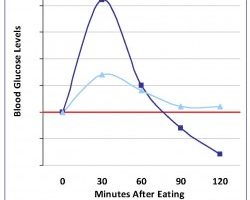
To control blood sugar, what we are after—the real goal—is to avoid “metabolic stress” that puts our hormone system on “red alert” and our body through a hyper/hypoglycemic rollercoaster. Metabolic stress occurs when we eat too much high-glycemic food and/or too much carbohydrate without sufficient protein/fat “buffers.”  The result is a sharp rise in blood glucose (Chart A), forcing insulin, the glucose storage hormone, to come to the rescue, and remove excess glucose from the blood stream.


Instead, we want to choose low-glycemic foods and higher-GI carbohydrates balanced by proteins and fats (their GIs=0) so that blood sugar rises moderately and is sustained for several hours above the pre-prandial (pre-meal) zero line (Chart A). Such a low-glycemic pattern is what helps maintain energy and mental focus.  In contrast, high-glycemic foods eaten alone or in combination create a blood sugar spike that can result in hunger, irritability, lack of concentration, and overeating shortly after a meal.  [See the work of David S. Ludwig, High Glycemic Index Foods, Overeating, and Obesity, www.pediatrics.org].


Metabolic Stress. As touched on above, metabolic stress describes what happens in the body in reaction to excessive levels of blood sugar following a high-glycemic meal.  In an attempt to restore blood sugar to normal levels, the pancreas releases insulin to remove excess glucose.  With the help of insulin, much of this glucose is stored in the form of glycogen in the liver, in the blood as high triglycerides, and as fat in the cells of muscles and tissues, particularly around the belly.


Unfortunately, in the “alarm mode” it is easy for the pancreas to overshoot.  Insulin in excess can then cause a steep drop in blood sugar (BGLs plunging below the zero line, as shown in Chart A) and a hypoglycemic condition that can trigger a new cycle of hunger, irritability, cravings for carbohydrates, and overeating.   When insulin does its job too well and blood sugar dips to hypoglycemic levels that are inadequate to fuel the brain, the body calls upon a new set of hormones—principally glucagon, as well as adrenal hormones such as cortisol and adrenaline—to  restore blood sugar to normal levels by reversing the fat-storage process.  Glucagon does this by setting in motion enzymes needed to convert the liver’s glycogen stores back to glucose.


When we select foods, the idea then is to avoid metabolic stress.  This is because metabolic stress taxes the body’s hormone and organ systems, particularly the pancreas (which produces insulin and glucagon), the adrenals (cortisol and adrenaline), and the liver thus leading to a variety of issues including insulin resistance.  One way is obviously through the foods that we chose to eat.  Another is to eat well-balanced meals frequently enough to avoid hunger and rapid carbohydrate assimilation: “Carbohydrates are absorbed more slowly with increased meal frequency, often resulting in a reduction of insulin response, postprandial blood glucose, and serum cholesterol levels.3


Graphics—Blood Sugar Behavior Following a Variety of “Meals”


Of the following numbered charts, the first three are based upon scientific research journal articles (Charts 1, 2A, 2B), while the last four (Charts 3-6) are constructed from my own self-testing of foods4 using a simple blood glucose monitor.  I decided to do my own testing for two reasons—I wanted to try a variety of foods and combinations that, to my knowledge, have not been tested and presented graphically in scientific journals; and, I wanted to illustrate how easy this can be as a way to encourage you to try testing your own favorite foods.


From graphic drawings of what happens to blood sugar after eating different foods, we can discover  strategies for “food combining” that will moderate blood sugar—combining fats and proteins with high-glycemic foods (to offset their blood glucose impact), while emphasizing combinations of lower-glycemic whole grains, legumes, fruits, and vegetables to avoid metabolic stress.   It is interesting to note that, apart from vigorous exercise, only proteins and fats, with their flat-to-negative impact on blood sugar, can effectively temper high-glycemic carbohydrates.  While fruits and vegetables are laudable in so many ways, their own carbohydrate content adds to the glycemic load of a refined carbohydrate meal.  Thus, fruits and vegetables cannot be counted on in the same way that proteins and fats can to effectively dampen the metabolic impact of refined carbohydrates.


Concepts Suggested by the Charts:

Chart 1:  Blood Sugar Curves of White Bread Compared to Bread with Added Fiber, Sourdough, and Vinegar. Eating white flour products like white bread readily exposes starch granules to digestive enzymes.  Starch is quickly digested and absorbed, and glucose is rapidly delivered to the blood stream.  The resulting spike in blood sugar at 30-minutes is followed by a hypoglycemic “low” within 90 minutes of eating.  In other words, within 90 minutes, hunger can set in.  As the work of insulin removes excess glucose from the blood following the 30-minute peak (Chart 1), and, without other foods to slow digestion and delay gastric emptying (like proteins, fats, and fiber), blood sugar plummets to below pre-meal levels soon afterward—we are hungrier than before!  Acids like sourdough and vinegar slow digestion and moderate this pattern.  Of the variations shown, fiber added to foods is the most effective at moderating postprandial blood sugar.


Charts 2A and 2B:  Blood Glucose and Insulin Reactions of Normal and Diabetic Subjects. These charts illustrate several points.  The first, people can experience very different blood sugar reactions to exactly the same meal.  This is especially true of diabetics, for whom the blood glucose reaction is greater than for normal subjects (Chart 2A). For diabetics, blood glucose levels are generally higher both prior to and after eating.  More importantly, the insulin reaction of diabetics is far more extreme, as indicated by the dotted lines (Chart 2B).  Insulin levels for diabetics rise far in excess of normal subjects—double the reaction—and these are sustained high levels.  High insulin levels cripple efforts to lose weight:  When insulin stays high, the body is less able to tap into fat stores. This is why diabetes and obesity often go hand-in-hand (90% of diabetics are either overweight or obese). With high insulin levels, it can be hard to avoid the double-edged sword of belly fat that partners with hunger and overeating:


According to Dr. Jennie Brand-Miller, “If insulin levels are high all day long, as they are in insulin resistant and overweight people, the cells are constantly forced to use glucose [rather than fat] as their fuel source…The blood glucose level (BGL) then swings from low to high…playing havoc with appetite…and the store of carbohydrates in the liver and muscles undergo major fluctuations over the course of the day.”


Chart 3:  Instant Oatmeal, Whole Oats (Soaked and Not Soaked), and Whole Oats Combined with a Protein and Fat. Instant oatmeal, which we might think to be a wholesome breakfast, in fact traces a blood glucose pattern similar to white bread (shown in Chart 1).  This may be indicative of the fine particle size to which oats must be ground to become “instant” and to the oat flour that is often added to instant oatmeal as a thickening agent.  In two separate tests, I also consumed instant oatmeal adding 1 tablespoon of sugar, which resulted in a higher 30-minute peak; and, instant oatmeal adding 1 tablespoon of butter, which reduced the peak at 30 minutes and sustained the curve above zero through the 2-hour test period (I did not clutter the chart to show these expected results).   Chart 3 also illustrates that soaking whole oats (to degrade phytic acid, a mineral inhibitor) greatly increases the glycemic impact compared to oats that are not pre-soaked before cooking.  This is because soaking makes grains more digestible and renders the starch more available to digestive enzymes.   Adding a protein/fat to pre-soaked, cooked whole oats—in this case 2 ounces of salmon—significantly dampens the metabolic reaction and easily sustains blood sugar throughout the two hours following the meal.


Chart 4: Blood Sugar Curves of Proteins; Fats; Carbohydrates:  Salmon, Kidney Beans, Whole Oats, and a Coke. This is one of my favorite charts because it illustrates disparate blood sugar reactions to quite different foods—a protein/fat (salmon); a whole-grain carbohydrate (oats); a carbohydrate/protein (beans); and a pure high-fructose corn syrup (HFCS) carbohydrate (Coca-Cola).  The footprint of the Coke is a classic case of metabolic stress:  the peak glucose increment of 50 at 30 minutes is by far the greatest reaction of any food I tested as a first meal.  With the Coke, insulin comes to the rescue to such an extreme that blood sugar plummets to pre-fasting levels within the first hour following the Coke.   What the chart says is, if we have a Coke for a breakfast on the run, we can be hungry by the time we arrive at school or the office —and, all the while we have also put our body’s hormone system through the wringer.


As an extreme contrast to Coke, salmon drops initially in the first 30 minutes (the flat-to-negative glycemic effect of proteins and fats) and then rises above pre-meal levels.  In the case of both slow-metabolizing proteins and fats, the body has time to moderate the flow of insulin and glucose to keep blood sugar well-balanced.  Because the body reacts to proteins and fats in mirror-image fashion to carbohydrates (contrast salmon with oats), proteins and fats can be paired with carbohydrates to modulate the 30-60 minute blood sugar rise normally associated with carbohydrates (as in the Coke and whole oat curve) and cushion the 60-120 minute drop in blood sugar that would otherwise occur with these carbohydrates.  In other words, in view of the salmon curve, it seems to make sense to begin meals with sufficient proteins and fats before introducing high-glycemic foods.


Our final example here is kidney beans, which illustrates the value of foods that are balanced combinations of carbohydrates, fiber, and protein (see the food composition list in Appendix A, which outlines the macronutrients of our test foods.).  Kidney beans can be eaten alone due to the inherent blend of fiber, protein, and phytic acid (phytates reduce the glycemic effect).  After a meal of kidney beans, blood sugar traces a moderate initial rise and a gentle tapering off, but at levels that are sustained above pre-prandial levels throughout the 2-hour test period.


Chart 5:  Kidney Beans with Added Grains; Vinegar; and Vinegar and Oil. Because kidney beans trace a gentle, sustained blood sugar curve, I chose to use them to test the addition of an acid (apple cider vinegar); an acid and oil (vinegar and extra virgin olive oil); and a carbohydrate (whole oats that were pre-soaked before cooking).  Adding vinegar to beans and even more so, vinegar and oil, significantly moderates the blood sugar effect of kidney beans.  Vinegar and oil accomplishes this same function for other foods if you keep them handy at a central place in the kitchen and on your dinner table.


Combining beans with grains (in our bean-whole oats example) would normally call for a 1:2 ratio of beans-to-grains in order to assemble complementary amino acids in the right proportion for a complete vegetarian protein.  Yet, eating beans and grains in this standard vegetarian way spikes blood sugar.  The idea that “wholesome” vegetarian meals push blood glucose to an uncomfortable zone is also borne out by other examples of vegetarian meals explored in my own day-to-day personal testing.  It appears that vegetarian meals, without the anchor of animal proteins and fats, easily spike blood sugar. [Vegans and vegetarians may be particularly interested in using a simple blood glucose monitor to sharpen food combining skills.]  What I believe this specific beans/oats case tells us is that beans and grains alone can deliver too much carbohydrate for the body to handle, if not offset with adequate protein/fat buffers.


The Second Meal Effect


The second meal effect means that what we eat at one meal affects the glycemic and insulin response at the next.  A low-glycemic breakfast will curb the response at lunch, and a low-glycemic dinner can have the same muting effect at breakfast the next morning.5  A breakfast of pancakes with maple syrup will work best when preceded by a late steak dinner the evening before.


Chart 6: Blood Glucose Response to Instant Oatmeal as a Second Meal. This chart illustrates the second meal effect– that what we eat at one meal affects postprandial blood sugar behavior at the next. Procedure: On three separate mornings I ate instant oatmeal as a second breakfast three hours after a first 12-hour fasting breakfast.  On each of three separate mornings, the first meal was either—two poached eggs; instant oatmeal; or a Coca-Cola.


To fully appreciate the impact of two back-to-back carbohydrate breakfasts please notice that the scale used for Chart 6 is twice that of Charts 3-5.


Results: Eating two successive carbohydrate breakfasts dramatically spiked blood sugar at the second meal.  This was true for Coke-oatmeal, but especially oatmeal-oatmeal. In dramatic contrast, 2 poached eggs as a first breakfast comfortably accommodated the carbohydrate load of oatmeal as a second meal—this curve meanders around the zero line.  There was no rise in blood sugar following the second meal of oatmeal—a food that normally spikes blood sugar.  This second meal experiment points to the wisdom of eating dessert at the end of a meal—when ,like 2 eggs, proteins and fats from a typical dinner can buffer the sugar in a sweet dessert.


More importantly in terms of successive meals, it, of course, suggests the importance of a good breakfast that includes proteins and fats, not only to help get through the morning without hunger, but also to blunt the blood sugar effects of the 10 o’clock coffee/snack break.  If nothing else, it means we need to feed children a wholesome breakfast that includes proteins and fats to stay with them through the morning and to curb the blood sugar impact of snacks—such as graham crackers and apple juice that are so often served at nursery schools. What we do to our children when we give them a sugary cereal or a Pop-tart for breakfast extends beyond this first meal to affect their blood sugar, hunger, concentration, and desire to overeat throughout the rest of the day.  For a more complete discussion, I again recommend the work of Dr. David Ludwig regarding high-glycemic foods and overeating, cited in the Recommended Reading section at the conclusion of this newsletter.


Using a Blood Glucose Monitor For Your Own Personal Experiments


Blood glucose monitors are sold in most drug stores, where they are principally inventoried to serve diabetics.  They are not expensive.  A simple monitor sells for around $30.  The sophisticated replacement test strips that are used to take each reading (expressed as mg/dL) are what can be expensive (though strips can be covered by insurance).  Refills usually cost more than $60 for a set of 100.  A monitor is quite easy to use.  Most pharmacies can help you if you are having trouble.


Normal Range for blood glucose are:

Fasting or before meals   <100 mg/dL

2 hours after a meal         <140 mg/dL


Resetting the Table–to Control Blood Sugar (For a discussion of other strategies, see April 2011).


When you sit down to a meal, ask yourself  if you have incorporated sufficient protein and fat and consider adding some of the following to your dinner table in order to moderate blood sugar:


  • Ramekins filled with condiments like nuts and seeds (GI=0).  Nuts and seeds provide healthy fats, fiber, vitamins, minerals, and antioxidants, while they slow digestion and curb blood sugar.
  • A tart vinegar6 and extra virgin olive oil.  Or, flax oil.  Ume plum vinegar, which is alkalizing and a good digestive aid, is also a good choice
  • Sourdough bread or whole-grain bread with whole kernels; butter from grass-fed cows and organic nut and seed butters such as tahini and pumpkin seed butter.
  • A pitcher of water and glasses for all—sometimes we mistake hunger for what is in fact thirst.  You might flavor the water with a little lemon juice or other flavoring.
  • Coconut sugar to replace cane sugar.  Coconut sugar is not refined so it retains minerals, including magnesium, zinc, and iron, as well as B vitamins.  Its GI about half that of cane sugar.
  • Powdered cinnamon. One of the best herbs and spices to moderate blood sugar.  It can be sprinkled on hot cereals and desserts such as puddings, custards, and stewed fruits.
  • Crudités such as celery. Celery is a great way to end the meal, whether to cap off a rich dessert or simply to add “crunch” when hunger is satisfied but you are still looking for “something more.”  Celery provides moisture and fiber to slow gastric emptying and moderate blood sugar.  Celery helps clean the teeth.  It also provides electrolytes and detoxifies while it lowers cholesterol.  Be sure to buy organic. Because celery is normally treated with ethylene gas to remove the bitterness (and its dark green color), it is one of the most chemically-treated foods.7
  • If you currently take a chromium supplement to curb blood sugar, consider brewer’s yeast, if you do fine with yeast—yeast is a common allergen.   [Brewer’s yeast is a different variety from torula yeast, the yeast linked to Candida].   Brewer’s yeast is loaded with B vitamins and minerals.  One tablespoon provides 70% of the RDA for chromium,8 the primary micro-mineral required by the body to regulate blood sugar.  Brewer’s yeast can be sprinkled on salads, soups, yogurt, or mixed in drinks.  It is high in phosphorus (40% RDA), so be sure to consume sufficient calcium, and do not overuse.


Side Question:  How can people in some LDCs consume an 80% high-carbohydrate/high-glycemic diet and avoid diabetes? My guess is there are at least three reasons—more chromium in the soil; fewer refined carbohydrates (refining removes 90% of the chromium in wheat, as well as the fiber); and vigorous physical activity.  High-glycemic foods are not “ bad;” they are appropriate to restore the body from rigorous physical labor.


May Recipe:  Crunchy Quinoa Salad

1 cup quinoa (white, red, or mixed), rinsed and drained

2 cups filtered water

1 cup diced carrots

1 cup chopped celery

¼ cup minced scallion

½ cup finely chopped parsley leaves, optional

1 cup chopped tamari or regular almonds


Dressing: Equal parts—shoyu or tamari; tahini, and mirin.

  1. Cook quinoa separately in water and a pinch of salt; let cool
  2. Once quinoa is cool, mix with carrots, celery, scallions, almonds and toss.
  3. For the dressing, mix and whisk together equal parts, shoyu, mirin, and tahini.  Add dressing to quinoa salad, toss and enjoy.

Derived from: Gina@theorganiccoach.com


Appendix A:  Self-Testing Methodology


For my own self-testing of foods, I used a simple blood glucose monitor.  I appreciate that to hold scientific weight my tests would require a large sample size and multiple rounds of testing, but this was not my intent.   Instead, I wanted simply to provide a rough feeling for how foods affect blood sugar following a meal.  I did apply a degree of rigor, by testing foods as the first meal of the day consumed after a 12-hour overnight fast, and I consumed comparable quantities of food, where applicable.


In selecting foods for testing, I wanted to try foods that were rather pure proteins, fats, carbohydrates, as well as combinations thereof.  In reality, few foods are totally protein, carbohydrate, or fat.  Even though we think of whole oats as a carbohydrate, they are also fiber, protein, and 3 fat.  So, to interpret the charts, I list here the composition of the foods in my test universe.


Organic oats, 40 g dry weight=27 g carbohydrate (4 g fiber); 6 g protein; 3 g fat;

Butter, 1 teaspoon=5 g fat; 0 g carbohydrates; 0 g protein;

Eggs, 2 poached=12 g protein, 8 g fat, 0 g carbohydrate.

Canned wild sockeye salmon, 2 oz. serving= 12 g protein, 4 g fat; 0 g carbohydrates (0 g fiber);

Organic canned kidney beans, ½ cup serving= 18 g carbohydrate (10 g fiber), 8 protein; 0 g fat;

Coca-Cola, 12 oz. serving=42 grams carbohydrates (42 grams sugar as HFCS), 0 fat, 0 protein;


[A 50 gram serving was consumed to test instant, steel cut, whole oats, and kidney beans.]


Because 12-hour fasting, pre-meal blood sugar reading can vary, all data points at time zero prior to the first morning meal were indexed to zero in order to illustrate the change from a neutral starting point.


Reading Resources:


Granfeldt, Y., Liljeberg, H, Drews, A., Newmand, R, & Bjorck, I. (1994).  Glucose and insulin responses to barley products:  influence of food structure and amylase-amylopectin ratio.  American Journal of Nutrition, 59, 1075-1082.


Jenkins, D.A., Wolever, T.M., Taylor, R.H., Griffiths, C., Krzeminska, K., & Lawrie, J. A. (1982).  Slow release dietary carbohydrate improves second meal tolerance.  American Journal of Clinical Nutrition, 35, 1339-1346.


Juntunen, K.S., Niskanen, L.D., Liukkonen, K.H., Poutanen, K.S., Holst, J.J., & Hykkanen,H.M., (2002).  Postprandial glucose, insulin, and incretin responses to grain products in healthy subjects.  American Journal of Clinical Nutrition, 75 (2), 254-262.


Ludwig, D.S, Majzoub, J.A., Al-Zahrani, A., Dallal, G.E,, Blanco, I, & Roberts, S.B.  High-glycemic index foods, overeating, and obesity (1999). Pediatrics, 102 (3), e26.  Retrieved November 6, 2010 from:  http://pediatrics.aappublications.org/cgi/content/full/103/3/e26.


Ostman, E.  (2003) Fermentation as a means of optimizing the glycaemic index:  food mechanisms and metabolic merits with emphasis on lactic acid in cereal products.  Department of Applied Nutrition and Food chemistry, Lund University, Sweden, 1-59.


Ostman, E.M., Nilsson, M., Liljeberg Elmstahlt, H.G.M, Molin, G. & Bjorck, I.M.E. (2002).  On the effect of lactic acid on blood glucose and insulin responses to cereal products:  mechanistic studies in healthy subjects and in vitro.  Journal of Cereal Science, 36, 339-346.


Reaven, G. (1979).  Effects of differences in amount and kind of dietary carbohydrate on plasma glucose and insulin responses in man.  The American Journal of Clinical Nutrition, 32, 2568-2578.


Wolever, T.M.Jenkins, D. A., Ocana, A.M., Rao, V.A., & Collier, G. R.,  (1988).  Second meal effect:  low-glycemic-index foods eaten at dinner improve subsequent breakfast glycemic response.  American Journal of Clinical Nutrition, 48, 1041-1047.


Books:

Gropper, Smith, and Groff, Advanced Nutrition and Human Metabolism.


Institute for Functional Medicine, Clinical Nutrition: A Functional Approach.


Pizzorno and Murray, Textbook of Natural Medicine.


Copyright 2011 Pathways4Health.org


  1. I use the label “traditional” carbohydrates, just as we call unrefined fats, “traditional” fats. []
  2. . Hegarty, Nutrition:  Food and the Environment (1995), 143-68.  Plants, through photosynthesis, create carbohydrates in many forms—simple sugars (e.g., glucose, fructose, glactose); oligosaccharides (e.g., fructooligosaccharides); starch (amylase and amylopectin); and non-starch polysaccharides (cellulose, pectin, hemicelluloses, and gums). They all play different metabolic roles, particularly soluble fiber which slows gastric emptying and helps curb blood sugar response.  Americans consume less than one-fifth the fiber of people worldwide.  Fiber protects against CVD, diabetes, and cancer.  (Clinical Nutrition, 27). []
  3. Clinical Nutrition, 35 []
  4. For a description of the testing procedures used, see Appendix A. []
  5. DJ Jenkins et al. (1982); and TM Wolever, et al. (1988).  See Reading Resources. []
  6. Vinegar weakens bones (we add vinegar to bone stocks to leach minerals).  Fats and oils buffer this action, so vinegar should be used in moderation and accompanied by a fatty acid when possible. []
  7. Rebecca Wood, The Whole Foods Encyclopedia, 35. []
  8. People in some LDCs consume a very high (80%) carbohydrate diet, yet have no major diabetes problem.  Why?  Perhaps because, unlike the U.S., their soil is not depleted of chromium and they do not consume vast quantities of refined carbohydrates.  Refining extracts almost 90% of the chromium from wheat. []